Point of No Return
David Flybury
He had this friend in Berlin, Cesky Krumlov (Jino said it was a character from Chekhov, not his real name), and we visited him, me and Jino, Berlin. One of those wealthy gays. Spoke English the way the Germans do, with strange expressions: 'absolutely heavened, jam joked,' as though that were cockney rhyming slang for something.
No spring chicken he – no dependents, no erotic potential, invisible sixty-year-old men, yeah? One of them. And me and Jino, you know, in our thirties, in our prime. We ... Well why not? We partied. It was a laugh.
Grossed out? You don't understand. Haven't you ever done that? Where you know someone is watching and ... it's a turn on? That's liberating, in a way, to be, you know, encouraged, to have an audience, to be spectated upon.
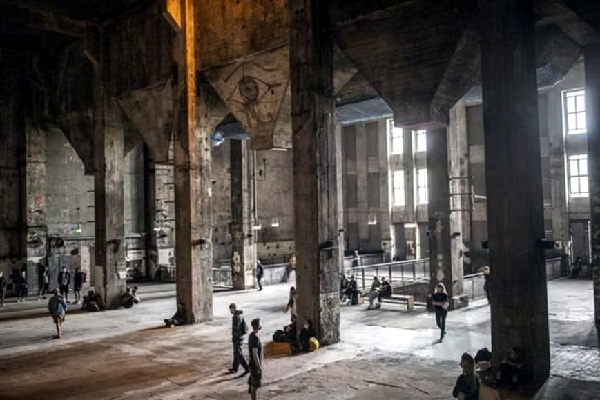
Berlin is very odd. Gaudily run-down, Berlin. Berlin is like that, or it was: graffiti, beer bottles, refuse. Makes you think, where's it all coming from? But it is in its industry that you see a city's strength. Its gas holders, its depots and storage, logistics and distribution centres, refuse and recycling operations, its cranes and canals, its barges and lorries and railways. All that backup, and you think, like, it has to be o.k., doesn't it? Because there's all that critical mass backing it up, all that infrastructure.
But you walk along the street and all you see is you think, like, What's behind it? What's propping it up? What's it based on?
He was like that. Cesky Krumlov. His wealth. You thought, I thought, I wonder where it's all coming from? But I didn't ask.
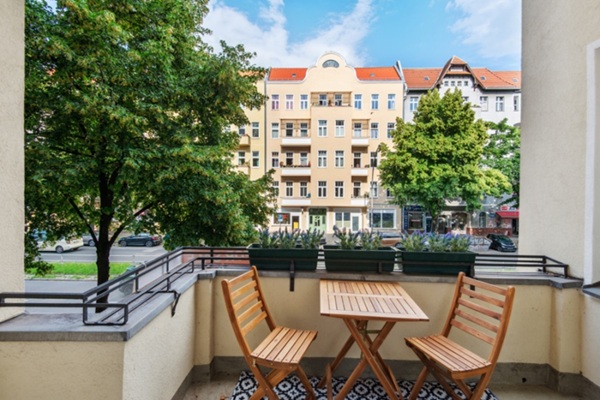
He lived in a block of flats with wide balconies all the way round, big as rooms. So there was always this sense of spaciousness you could use, plus, behind the balcony, behind the reflective sheets of plate glass, there was this privacy that, even with the curtains open, even with the lights on and at night, there was this sense that no one could look in. And you could do anything. Wild it up. So it was liberating – to feel this safe, invulnerable; it made me feel like, yeah, no one can, you know, see you! It's safe to be, you know, safe, to feel safe, to feel, this safety. They aren't going to take it away! So I thought yeah it's liberating. And I wanted to feel liberated. I was tired of feeling ... trapped, like I didn't have any choices, like I was a prisoner of my own life – ironically, seeing as how where I ended up was prison, literally. But even prison felt liberating after that. Because it's kind of true what they say, you know, the truth will set you free. Well it does. Yeah, but what is the truth? Yeah. That's the problem. Yeah ... possibly.
He was very controlling. Jino, I mean. He was. I mean I asked him to ask this Cesky if he could help - he was HIS friend! I said. He just laughed. 'That isn't how it works,' he said.
It must be strange to him, Cesky, but I think I, I thought to myself, if I had his incomparable wealth I, you know ... living in useless luxury ... would want to help.
No matter.
***
I, I, believe me, I would have ended it myself if I could. Somehow, I knew he was controlling me. Clever little sod; knew I liked fucking him. Knew I liked it a lot. Knew a lot. He knew a lot. I knew what I didn't have to put up it with but I, I, believe me: I knew what. I knew what. I would have ended it myself if ... if I could have stopped it myself. But I knew what I was doing. I did.
On that couch. Cesky watching. I thought (that was Mount Eryx: that was my point of no return) I thought: if we could just get a couple more weddings, or a funeral, they pay for themselves and rake it in, but if we advertised ... and that cost money and still people have to die, or fall in love. You can't hurry It. So that was a, a cost, it turned out!
It, it, it ... It ... Perhaps let out a room in the vicarage? I asked Jino, privately, later that night, if he'd contribute. That was in Berlin. The 'conversation' got out of control, unfortunately, a bit quickly but perhaps things had already run their course; in each other's company, 24/7, him and Cesky – the charm can wear a bit thin. He was adamant. He said, 'Now you're making out it's me when you're the one it started with, and I'm like, what were you on when <that> made sense?' – like that made sense!
Either way, he left. What I mean is: I returned alone to England.
***
Strange how single moments summarise an entire experience. When I realised he had left me, not as I went to bed that night after the flight home but next morning finding myself alone and the space where he might have been, empty and fresh; I patted that cool sheet, smoothed it with my palm as it might have been his chest, and cried, literally, to think that what had been, whatever it was, and my idea that he would not leave, or would return, or that I could persuade him, or something, was an avenue that has closed.
And I felt a bizarre relief!
The pain, I felt later.
Mm, remembering that morning, came to summarise everything. Ha. Funny how that is.
Haha. Well, they say you have a crisis when you can afford one. And I couldn't afford one, yet.
(This piece is taken from David's soon to be published novel, 'The Apple of the Vicar'. His work is available on Amazon.)